In Texas, the ink is barely dry on the last round of redistricting, and already, Republican lawmakers are racing to redraw congressional maps—again. Backed by President Trump and aimed squarely at diminishing the political power of Latino voters, this latest effort isn’t about retaking control of the U.S. House. They already have it. It’s about cementing their grip before demographic tides wash their majorities away.
And while this is deeply troubling, it’s also—oddly—encouraging. If Republicans were truly confident that their policies and candidates reflected the will of the people, they wouldn’t be scrambling to gerrymander their way to safety. Their desperation is a sign that American democracy, however flawed, still holds enough uncertainty to make power feel precarious. That’s the good news.
The New Map, the Same Old Playbook
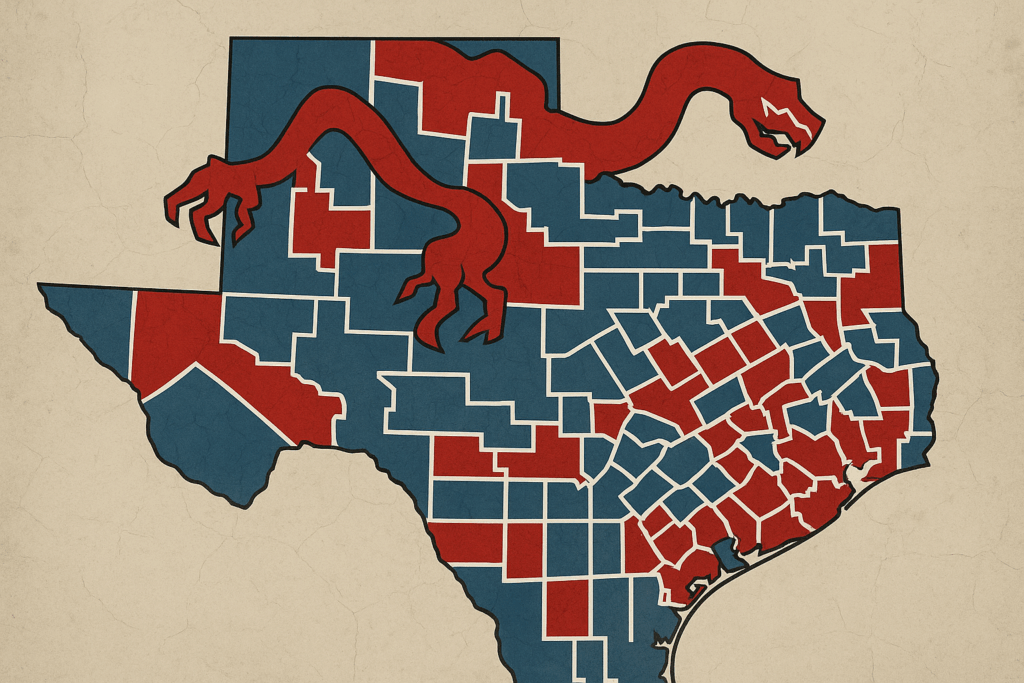
The proposed redistricting plan unveiled by Texas Republicans surgically carves up fast-growing, heavily Latino areas to create safer GOP districts. According to The Texas Tribune, the map reduces the number of Hispanic-majority districts and dilutes Latino voting power in areas like the Rio Grande Valley and South Texas—just four years after courts ordered fairer maps for similar reasons.
This time, Republicans are not even pretending this is about fairness or representation. Governor Greg Abbott has threatened to remove Democratic lawmakers from office after they broke quorum and fled the state in protest—an echo of the 2021 voting rights standoff. Meanwhile, Trump has vocally supported the new maps, pushing the narrative that Republican dominance in Texas must be protected at all costs.
When Winning Isn’t Enough
What’s perhaps most revealing about all this is that Republicans aren’t just trying to win—they’re trying to rig the playing field to ensure they can’t lose. And it begs the question: if your political survival depends on silencing voters rather than persuading them, are you still participating in democracy? Or just performing it?
I’ll be blunt: the GOP isn’t doing this because it’s popular. It’s doing it because it’s afraid. Afraid of losing ground with Latino voters. Afraid of rising urban turnout. Afraid that the future doesn’t look like the electorate they’ve long relied on. They’re aware that they don’t have a vision or policies that resonate with the majority, and that reality and actual democracy are both existential threats to their power. And instead of adapting, they’re choosing suppression over evolution.
That’s a stark contrast to how Democrats tend to respond to electoral shifts. As someone who identifies as a Democrat, I can say with confidence that we often accept outcomes we don’t like because we believe the process—the democratic ideal—is more important than the result. That may sound naïve, but it’s also what keeps our system from collapsing under the weight of authoritarian impulses.
The Real Fix: Independent Redistricting for All
This moment should be a wake-up call, not just for Texans, but for every American who cares about representative democracy. Gerrymandering is a bipartisan problem, yes—but it’s most acute in states where one party has unchecked control. The only long-term solution is a Constitutional amendment mandating that all congressional districts be drawn by independent or bipartisan commissions.
These districts should represent actual communities, have equal populations, and resemble squares, not snakes. The process should be transparent, data-driven, and immune to the whims of whichever party happens to be in power. Otherwise, we’ll keep relitigating the same battles every few years—each one leaving voters more cynical and less engaged.
Democracy Isn’t Theatrical—Yet
The fact that Republicans feel the need to resort to these tactics is, ironically, a backhanded compliment to democracy itself. In countries like Russia, North Korea, and Hungary—led by the authoritarian icons Trump seems to admire—elections are mere theater. Outcomes are predetermined. Opponents are silenced or jailed. Power doesn’t transfer—it calcifies.
That’s not where we are. Not yet. But if we don’t push back—if we don’t fight for fair maps, equal representation, and voter access—we could end up with a system where elections exist in name only.
So yes, the Texas GOP’s redistricting scheme is infuriating. But it also signals something hopeful: they know they haven’t won the long game yet. And as long as they feel the need to cheat, it means the rest of us still have a chance to win fairly.
This is not my content originally. But it makes the point in a bold and concise manner—including receipts…I mean links—so rather than write something similar I just want to share it.
A real question from a Trump supporter: ‘Why do liberals think Trump supporters are stupid?’
THE SERIOUS ANSWER: Here’s what the majority of anti-Trump voters honestly feel about Trump supporters en masse:
That when he made up stories about seeing Muslim-Americans in the thousands cheering the destruction of the World Trade Center, you said, “Not an issue.” (https://www.washingtonpost.com/…/donald-trumps…/)
That when you heard him relating a story of an elderly guest of his country club, an 80-year old man, who fell off a stage and hit his head, to Trump replied: “‘Oh my God, that’s disgusting,’ and I turned away. I couldn’t—you know, he was right in front of me, and I turned away. I didn’t want to touch him. He was bleeding all over the place. And I felt terrible, because it was a beautiful white marble floor, and now it had changed color. Became very red.” You said, “That’s cool!” (https://www.gq.com/story/donald-trump-howard-stern-story)
That when the Central Park Five were compensated as innocent men convicted of a crime they didn’t commit, and he angrily said that they should still be in prison, you said, “That makes sense.” (https://www.usatoday.com/…/what-trump-has…/1501321001/)
That you have watched the parade of neo-Nazis and white supremacists with whom he curries favor, while refusing to condemn outright Nazis, and you have said, “Thumbs up!” (https://www.theatlantic.com/…/why-cant-trump…/567320/)
That you hear him unable to talk to foreign dignitaries without insulting their countries and demanding that they praise his electoral win, you said, “That’s the way I want my President to be.” (https://www.huffpost.com/…/trump-insult-foreign…)
That you have watched him remove expertise from all layers of government in favor of people who make money off of eliminating protections in the industries they’re supposed to be regulating and you have said, “What a genius!” (https://www.politico.com/…/138-trump-policy-changes…)
That you have heard him continue to profit from his businesses, in part by leveraging his position as President, to the point of overcharging the Secret Service for space in the properties he owns, and you have said, “That’s smart!” (https://www.usnews.com/…/how-is-donald-trump-profiting…)
That you have seen him start fights with every country from Canada to New Zealand while praising Russia and quote, “falling in love” with the dictator of North Korea, and you have said, “That’s statesmanship!” (https://www.cnn.com/…/donald-trump-dictators…/index.html)
That Trump separated children from their families and put them in cages, managed to lose track of 1500 kids, has opened a tent city incarceration camp in the desert in Texas – he explains that they’re just “animals” – and you say, “Well, OK then.” (https://www.nbcnews.com/…/more-5-400-children-split…)
That you have witnessed all the thousand and one other manifestations of corruption and low moral character and outright animalistic rudeness and contempt for you, the working American voter, and you still show up grinning and wearing your MAGA hats and threatening to beat up anybody who says otherwise. (https://www.americanprogress.org/…/confronting-cost…/)
What you don’t get, Trump supporters, is that our succumbing to frustration and shaking our heads, thinking of you as stupid, may very well be wrong and unhelpful, but it’s also… hear me… charitable.
Because if you’re NOT stupid, we must turn to other explanations, and most of them are less flattering.
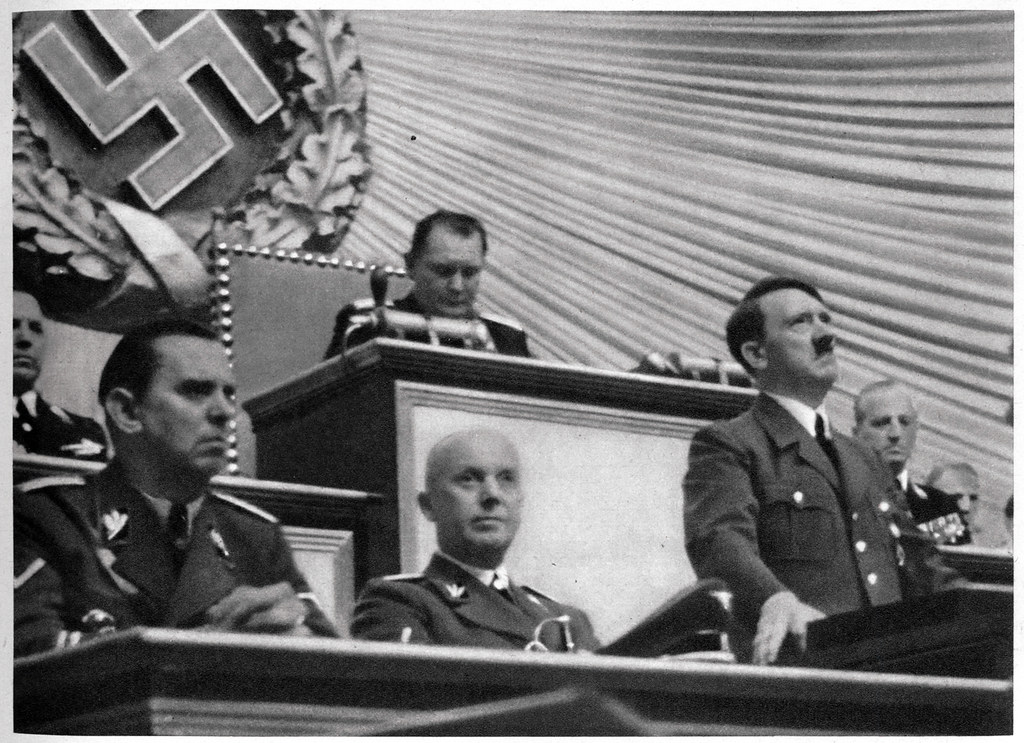
In 1933, Germany’s Reichstag—once the legislative heartbeat of the Weimar Republic—ceased to function as an independent governing body. With the passage of the Enabling Act, Adolf Hitler assumed unchecked power, and the Reichstag became little more than a stage for his speeches. Its members, rather than fulfilling their duty to legislate and hold the executive branch accountable, became instruments of a totalitarian state.
In 2024, the United States has not yet passed its own version of an Enabling Act, but it may not need one. The Republican Party, dominated by Donald Trump and his MAGA movement, is already showing signs of voluntary submission to an authoritarian leader. The GOP-controlled House and Senate, despite wielding legislative power, operate not as a check on Trump’s ambitions, but as an extension of his will. The collapse of a democracy does not require a single decisive law—it can happen through the slow, steady capitulation of those elected to defend it.
The Reichstag and the Republican Party: Parallel Paths to Powerlessness
When the Enabling Act passed in 1933, the Nazi regime systematically eliminated political opposition. The Communists were arrested en masse, the Social Democrats were forced into exile, and remaining lawmakers were either intimidated or coerced into submission. There are whispers and rumors of eerily similar actions now–as Republican legislators stay silent and vote against the interests of their constituents and democracy not out of loyalty to Trump or MAGA, but out of fear for their own lives and the lives of their families.
The Reichstag met only 19 times between 1933 and 1945, passing just seven laws—all dictated by Hitler. Compare this to the current state of the Republican-led House of Representatives. Since reclaiming control, the House has prioritized obstruction, partisan revenge investigations, and performative politics over governance.
Republican lawmakers who dare to challenge Trump face political exile—just as Liz Cheney and Adam Kinzinger did when they stood against the January 6 insurrection. Those who remain fall in line, fearing the wrath of Trump’s base more than they fear the collapse of democracy.
The Reichstag became an empty institution under Hitler. The United States Congress today isn’t any different.
Eliminating Opposition: From Political Arrests to Political Exile
In Nazi Germany, opposition figures were not just removed from power—they were jailed, exiled, or executed. While America has not yet seen political prisoners on that scale, the Republican Party’s internal purges are undeniable.
Liz Cheney and Adam Kinzinger, who served on the January 6th Committee, were ostracized and effectively removed from Republican politics.
Former allies like Mike Pence and Chris Christie, once loyal to Trump, are now persona non grata for daring to challenge his narrative.
Election officials and judges who ruled against Trump’s baseless fraud claims have been harassed and threatened.
Trump and Musk, with the help of a cadre of authoritarian sycophants, are punishing anyone who is not a MAGA loyalist and purging the federal government of employees who will not bend the knee to a would-be tyrant.
This isn’t an exact parallel to Nazi Germany, but the underlying principle remains the same: opposition is not tolerated, and those who speak out are punished.
The Death of a Legislature: The GOP’s March Toward Irrelevance
With no opposition left, the Reichstag ceased to function. Today, with the Republican Party reshaped into an arm of the MAGA movement, Congress risks the same fate.
The House, despite Republican control, is incapable of governing—spending more time on political spectacle than on passing meaningful legislation.
GOP lawmakers routinely echo Trump’s rhetoric, even when it contradicts facts, legal rulings, or their own previous positions.
Trump has openly declared that he wants to “terminate” parts of the Constitution that limit his power, yet Republicans refuse to condemn him.
A legislature that refuses to act as a check on executive power is no longer a legislature—it is a rubber stamp for autocracy.
Nuremberg and the Future Reckoning
After World War II, the Nuremberg Trials held Nazi officials accountable—including former Reichstag members who enabled Hitler’s rise. They claimed they were just following orders, just going along with the system—but history did not excuse them.
As Trump bulldozes American democracy, today’s Republican leaders–and maybe some of the elected Democrats–should expect to face a similar reckoning.
History will remember politicians like John Cornyn, Tommy Tuberville, Marjorie Taylor-Green, Ted Cruz, Lindsey Graham, and countless others as spineless enablers, too afraid or too ambitious to stand against an autocratic tide. And when the US version of the Nuremberg Trials comes, they will face the same fate as their Nazi dopplegangers–Göring, Hess, Frick, and the rest of the Reichstag members who were complicit.
The Final Warning
The collapse of democracy does not always require a single defining moment. The United States may never see its own Enabling Act because it may not need one.
A Congress that refuses to act, a political party that submits to a strongman, and a citizenry too distracted to resist—this is how democracy is suffocated.
We have already seen this playbook. We already know how this works out. Democracy will prevail and those enabling authoritarian fascism will be held accountable–even if they have to be hunted down decades later.
I just hope they all know that “I was just following orders” wasn’t a valid defense then, and it won’t be a valid defense now.
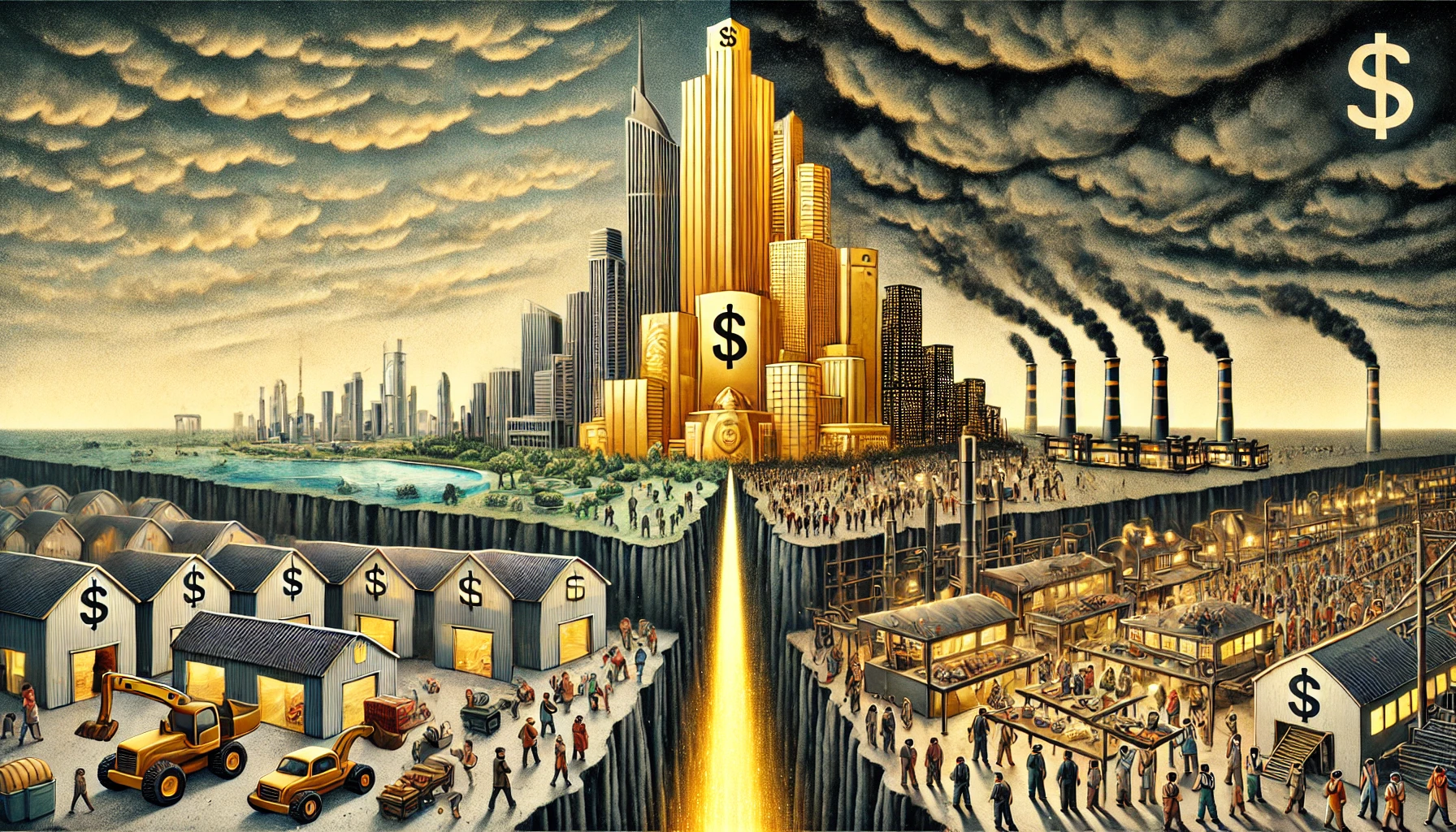
The world is increasingly defined by staggering economic inequality in which billionaires occupy a paradoxical position: revered as heroes of innovation while often escaping scrutiny for the exploitation and systemic inequities that underpin their wealth. Figures like Elon Musk, Jeff Bezos, and Mark Zuckerberg, much like their Gilded Age predecessors Andrew Carnegie and John D. Rockefeller, are idolized for their transformative achievements. Yet, these towering fortunes are rarely examined through the lens of the questionable practices, unethical tactics, and systemic flaws that made them possible.
A recent Oxfam report highlights the alarming concentration of wealth, revealing that the top 1% amassed over $40 trillion in new wealth in the past decade. This disproportionate gain, enabled by tax systems and policies favoring the ultra-rich, mirrors a pattern established during the Industrial Revolution. Just as the Gilded Age’s “robber barons” extracted immense value from the labor and resources of society, today’s billionaires leverage technological monopolies, tax avoidance, and worker exploitation to consolidate their fortunes. No one “earns” a billion dollars in isolation—such wealth is extracted, not created.
The Allure of the Billionaire Narrative
The myth of the self-made billionaire is a potent narrative in popular culture. It celebrates individual brilliance, grit, and hard work, perpetuating the idea that immense wealth is the ultimate reward for those who dare to dream big. Henry Ford is remembered for revolutionizing manufacturing with the assembly line, Elon Musk for electrifying the auto industry with Tesla, and Jeff Bezos for transforming global commerce with Amazon.
But this narrative omits a crucial element: the cost of these achievements. Workers in Amazon warehouses, for example, endure grueling conditions, while Musk’s Tesla factories have faced allegations of unsafe work environments. These stories rarely make headlines compared to tales of space exploration or electric cars. The media’s fixation on billionaire successes blinds us to the exploitation and systemic inequalities that make these fortunes possible.
The Achievements and Their Cost
There is no denying that many billionaires have left indelible marks on society. Carnegie’s steel empire built America’s bridges and railroads. Ford’s affordable Model T democratized transportation. Musk’s SpaceX has reignited global interest in space exploration. These achievements have reshaped industries and transformed lives.
However, these accomplishments came at a steep price. Carnegie’s success relied on suppressing labor rights, with incidents like the Homestead Strike highlighting the violence faced by workers demanding fair conditions. Ford’s celebrated $5-a-day wage was coupled with invasive surveillance of employees’ private lives. In the modern era, Amazon’s logistical innovations rest on the backs of workers subjected to intense productivity demands, while tech giants like Meta profit from invasive data collection and misinformation.
Exploitation and Unethical Practices
Billionaires often achieve their wealth through practices that would be unacceptable in most contexts:
Monopolistic Domination: Rockefeller’s Standard Oil crushed competitors to create a near-total monopoly, while today’s Big Tech empires use acquisitions and market control to stifle innovation.
Labor Exploitation: Workers across industries, from Tesla’s factory floors to Walmart’s retail operations, often face low wages, unsafe conditions, and minimal job security.
Shady Tactics: Whether it was Gould’s stock manipulation in the Gilded Age or modern tax avoidance schemes exploited by billionaires today, questionable ethics have been a consistent tool for amassing wealth.
As the Oxfam report illustrates, the systemic advantages enjoyed by the ultra-wealthy—such as favorable tax systems—further exacerbate inequality. While ordinary people pay a larger share of their income in taxes, billionaires utilize loopholes to shield their wealth, accumulating resources that could otherwise benefit society.
Philanthropy: A Paradox
Philanthropy is often touted as a defense for immense wealth. Carnegie built libraries, Gates combats global health crises, and Bezos has pledged billions to climate initiatives. While these efforts are impactful, they represent a fraction of their wealth and often serve to rehabilitate reputations tarnished by exploitative practices.
It is a “smoke and mirrors” distraction meant to sway public perception, but does little to address systemic inequality. It offers a band-aid solution to problems created, in part, by the systems that enabled billionaires’ fortunes. For example, Gates’ contributions to global health are admirable, but Microsoft’s aggressive business practices in the 1990s crushed smaller competitors and concentrated wealth.
The Role of Systemic Advantages
Billionaires do not operate in a vacuum; their success is built on a foundation of societal resources and systemic privilege:
Government Subsidies: Many industries, from fossil fuels to tech, benefit from taxpayer-funded subsidies and incentives.
Tax Avoidance: The Oxfam report underscores how billionaires exploit tax loopholes, hoarding wealth that could be used for public services.
Infrastructural Dependence: Publicly funded infrastructure, such as roads, education, and internet technologies, provides the groundwork for their enterprises.
Without these systemic advantages, their wealth would be inconceivable.
Insane Compensation Disparity
The inequity in wealth distribution is stark not only among billionaires but also within individual corporations, where CEOs often earn magnitudes more than their average employees. In 2023, the average CEO of an S&P 500 company earned $17.7 million, which is 268 times the compensation of the typical worker in those companies.
This disparity is not necessarily reflective of a proportional difference in effort or contribution. Actually, that is too mild. I’m not suggesting that CEOs or other execs don’t bring value to their companies, but this disparity is DEFINITELY not reflective of a proportional difference in effort or contribution.
This growing gap underscores a systemic issue where executive pay is disproportionately high compared to the value provided by average employees.
Such disparities are indefensible, as they often result from structural advantages and compensation practices that favor top executives, rather than a fair assessment of individual contributions. Addressing this imbalance requires a critical examination of corporate governance and the implementation of policies that promote equitable compensation structures.
Reframing Wealth
It is time to rethink how we view billionaires and their role in society. No individual amasses such wealth through merit alone—it is accumulated through systemic exploitation and societal structures. Recognizing this truth allows us to shift the narrative from glorifying billionaires to questioning the systems that enable such extreme inequality.
Instead of idolizing the ultra-rich, we should celebrate collective achievements and advocate for policies that redistribute wealth more equitably. Progressive taxation, living wages, and labor protections are steps toward creating a fairer society. Moreover, reframing success as a collaborative, community-driven effort can help dismantle the myth of the self-made billionaire.
By challenging the myth of “earning” a billion dollars, we can begin building a more equitable society—one where success is measured not by individual wealth but by collective progress.
Imagine spending $50,200—a median annual income for an individual in the United States in 2024—every single day for a year and ending the year richer than when you started. This isn’t a hypothetical exercise; it’s the reality for someone with $1.75 billion in wealth. Even after daily indulgence in this absurd level of spending, the compounding growth of their investments ensures they have more at year’s end.
This staggering inequality isn’t just about numbers; it’s about a system that allows wealth to grow unchecked, democracy to falter, and the social contract to erode. As billionaires amass unimaginable fortunes, their influence extends far beyond their bank accounts, shaping policies, economies, and even the fate of nations. This article explores the absurdity of extreme wealth, debunks the persistent myth of trickle-down economics, and examines how billionaire greed threatens democracy itself.
A Day in the Life of a Billionaire
Consider the absurdity of wealth inequality in real terms: $1.75 billion is more money than most people can comprehend, let alone earn in multiple lifetimes. To put it in perspective, someone earning $50,200 a year—representative of the U.S. median income—would need nearly 35,000 years to reach that figure. Yet billionaires wield this fortune as a baseline, spending extravagantly, lobbying aggressively, and growing their wealth exponentially.
To be fair, I am not an economist and my math is simplistic. I just assumed that 8% of the net worth is paid in taxes every year and the net remaining wealth grows at 10%. Someone with only $1.25 billion in wealth would actually lose a little money each year under this formula—but it would still take more than 140 years for them to reach zero.
There are a thousand other factors that can impact those figures either way, but the reality is that most billionaires aren’t paying 8% of their net worth in taxes, and many—if not most—are able to achieve better than 10% returns on their investments. Also, who in the hell needs to spend $50,000 every day of every year? So, if anything, my math may be far too conservative.
The Federal Reserve’s data paints a grim picture. The top 1% of Americans control over 30% of the nation’s wealth, while the bottom 50% struggle with just 2%. This chasm widens as the ultra-wealthy find new ways to hoard money and minimize taxes, exacerbating economic and social divides.
The Persistent Myth of Trickle-Down Economics
The foundation of modern wealth inequality lies in the myth of trickle-down economics—the idea that cutting taxes for the wealthy spurs investment, job creation, and economic growth for everyone. Originating during the Reagan era, this theory has shaped decades of policy. Yet its promises remain unfulfilled.
According to Robert Reich, trickle-down economics has systematically failed. Rather than reinvest in their businesses or employees, the wealthy use tax cuts to pad their portfolios, fund stock buybacks, and stash money in offshore accounts. Meanwhile, workers face stagnant wages and rising costs of living. Data shows that direct investment in lower- and middle-income households produces a far greater economic impact than tax breaks for billionaires. When wealth is hoarded, it is effectively removed from circulation, starving the economy of the spending that drives growth.
This is just common sense.
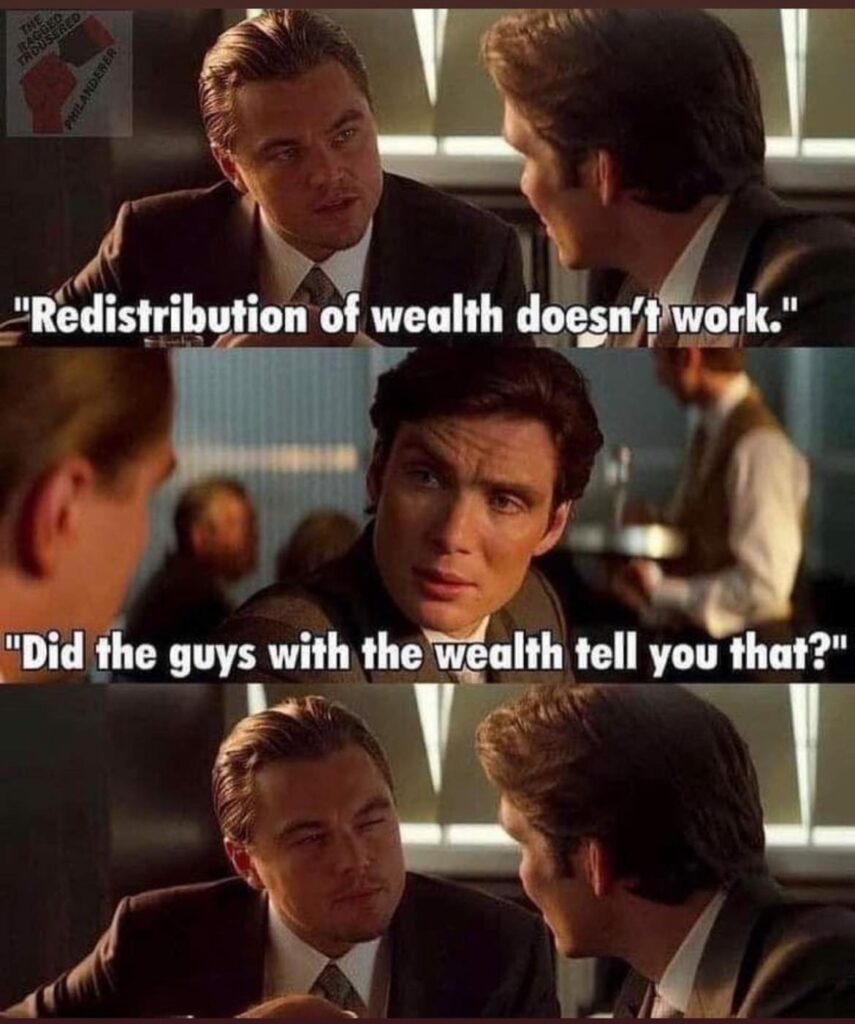
If you give more money to people who are poor or middle class, they don’t have the luxury of hoarding it. They need to pay rent and buy groceries. They have medical bills to pay, and automobile repairs to deal with. They need to replace their broken refrigerators. Bottom line—when you funnel money to lower and middle class families, it is virtually guaranteed to flow back into the economy…and eventually line the pockets of the wealthy anyway. But, if you give money to people who already have more money than it is even possible to spend, they simply add it to the hoard and jealously guard their wealth like Smaug in The Hobbit.
The numbers tell the story: Despite decades of tax cuts favoring the rich, income inequality in the U.S. has surged to historic levels. The supposed benefits of trickle-down policies remain trapped at the top, never reaching the vast majority of Americans.
How Billionaires Rig the System
Few events have so profoundly shifted the balance of power in favor of the wealthy as the Supreme Court’s 2010 decision in Citizens United v. Federal Election Commission. In a narrow 5-4 ruling, the Court determined that corporations and unions could spend unlimited amounts on political campaigns, effectively equating money with speech. This decision unleashed a flood of dark money into American politics, allowing billionaires to openly buy influence and tilt the democratic process in their favor.
The ruling didn’t happen in a vacuum—it was part of a broader pattern of billionaires leveraging their wealth to erode democratic safeguards. And now, we know that at least one Supreme Court justice who cast a vote in favor of this decision, Clarence Thomas, has been deeply entangled in ethical scandals involving billionaire Harlan Crow. Reports from ProPublica and other outlets have revealed that Thomas accepted undisclosed luxury travel, expensive gifts, and even real estate transactions from Crow, a conservative mega-donor. These revelations cast doubt on the impartiality of the Court and suggest that billionaires can effectively buy Supreme Court decisions.
Harlan Crow’s largesse is not merely about personal generosity—it’s an investment in a system that benefits him and his peers. By influencing a justice on the nation’s highest court, Crow has helped secure rulings that perpetuate the dominance of the ultra-wealthy. The Citizens United decision is a prime example, making it easier for billionaires to drown out the voices of ordinary Americans by flooding campaigns with money, shaping policy to their liking, and entrenching their power.
This ruling, coupled with unchecked wealth concentration, has transformed the United States into an oligarchy in all but name. Politicians no longer answer to voters but to donors with deep pockets. Billionaires now dictate policy agendas, block reforms that would benefit the majority, and stack the courts to ensure their grip on power remains unshaken.
The Citizens United decision has also exacerbated political polarization and corruption. Unlimited spending has emboldened billionaires to pour money into divisive, fringe candidates and causes, further destabilizing American democracy. Meanwhile, the public trust in institutions, including the Supreme Court, continues to erode as revelations like Thomas’s relationship with Crow come to light.
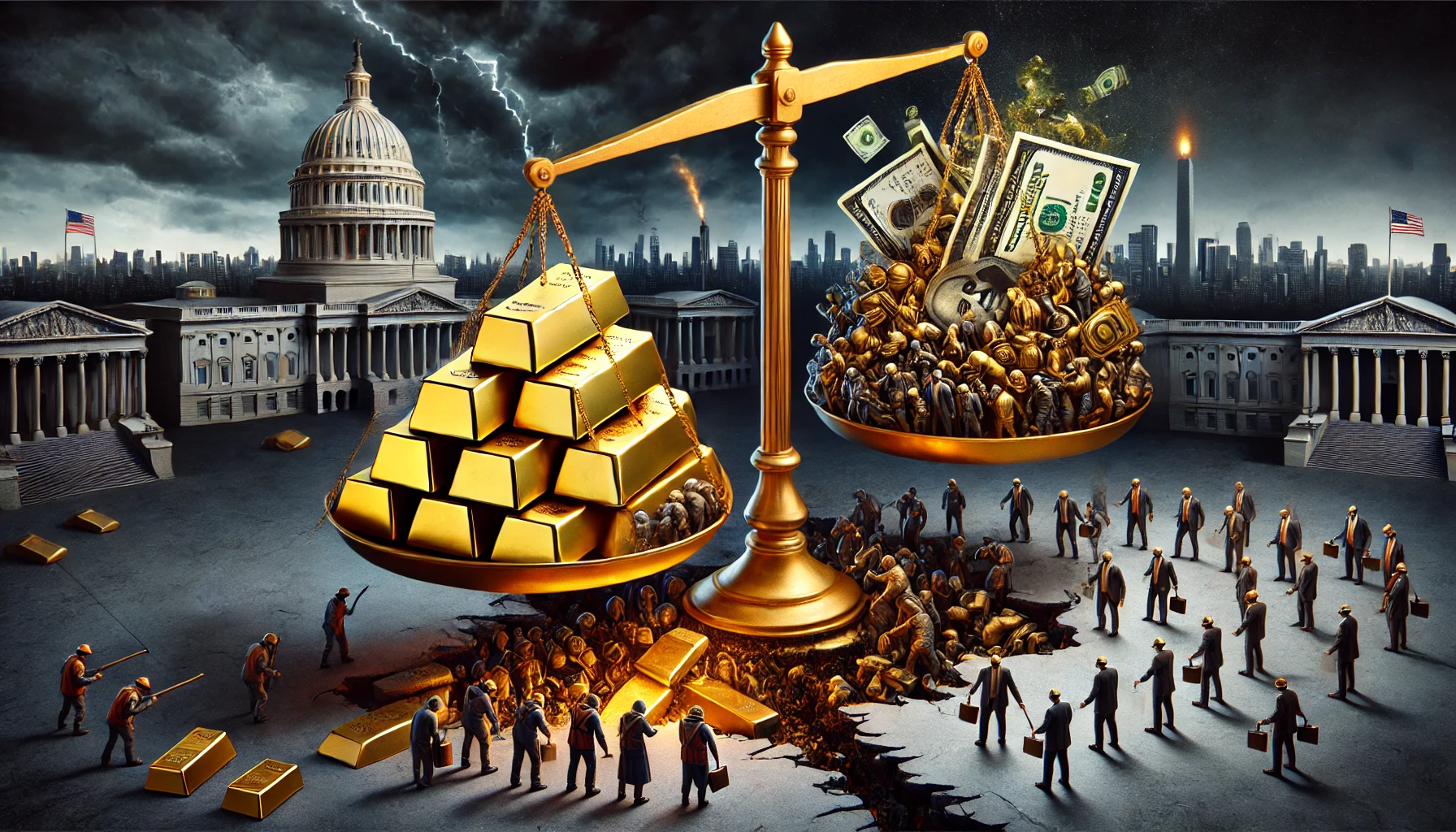
This is more than a policy debate; it’s a fundamental threat to democracy. When a handful of billionaires can buy political influence, judicial decisions, and even legislators themselves, the principles of equality and representation are obliterated. The scales of justice are no longer blind—they are weighed down by the interests of the ultra-wealthy.
Addressing this crisis requires urgent action. Public calls for stronger judicial ethics rules, campaign finance reform, and transparency measures must grow louder. It’s time to reverse the damage done by Citizens United, limit the corrupting influence of money in politics, and restore trust in democratic institutions.
If billionaires like Harlan Crow can buy Supreme Court decisions today, what hope is there for a fair and representative system tomorrow? The fight to reclaim democracy begins with acknowledging the rot at its core—and demanding systemic change to excise it.
The Moral and Societal Cost of Billionaire Greed
The societal cost of extreme wealth concentration is staggering. As billionaires hoard resources, millions struggle to afford healthcare, education, and housing. This erosion of the social contract fuels distrust, resentment, and unrest.
Consider countries with more equitable tax systems, such as those in Scandinavia. These nations invest heavily in public goods, resulting in lower poverty rates, better health outcomes, and greater social mobility. By contrast, the U.S. allows billionaires to hoard wealth while basic needs go unmet for millions.
This isn’t just an economic failure—it’s a moral one. What does it say about a society where a select few can live in unimaginable luxury while others ration insulin or face eviction? At what point does wealth accumulation become not just excessive but actively harmful?
The Path Forward: Restoring Balance and Democracy
Addressing wealth inequality requires bold action. Progressive wealth taxes, closing tax loopholes, and enforcing financial transparency are crucial first steps. By ensuring billionaires contribute their fair share, we can fund public goods like healthcare, education, and infrastructure—investments that benefit everyone, not just the elite.
But policy alone isn’t enough. We must also dismantle the myths that sustain the billionaire class, starting with trickle-down economics. Public education on economic systems and civic engagement can counter billionaire narratives and empower citizens to demand change.
Reclaiming democracy from the grip of extreme wealth is not just possible—it’s essential. History shows that collective action and informed advocacy can challenge entrenched power.
Reclaiming the Future
Change is possible. I’ll let you in on a little secret: Billionaires need consumers. Consumers don’t need billionaires. The wealth they covet has to come from somewhere. If nobody has money to buy goods and services, the economy will collapse.
Extreme wealth is not just absurd—it’s dangerous. When billionaires can spend the median annual income daily and still grow richer, it reveals a system designed to serve the few at the expense of the many. When that wealth is used to rig democracy, the stakes become even higher.
By addressing inequality, holding billionaires accountable, and demanding policies that prioritize the common good, we can restore balance to our economy and society. The future of democracy depends on it. The only question is whether we’re willing to fight for it.